
A space can look right and still feel slightly off, not wrong, just harder to relax in than it should be. That feeling usually isn’t about furniture or layout, it’s about what’s happening underfoot.
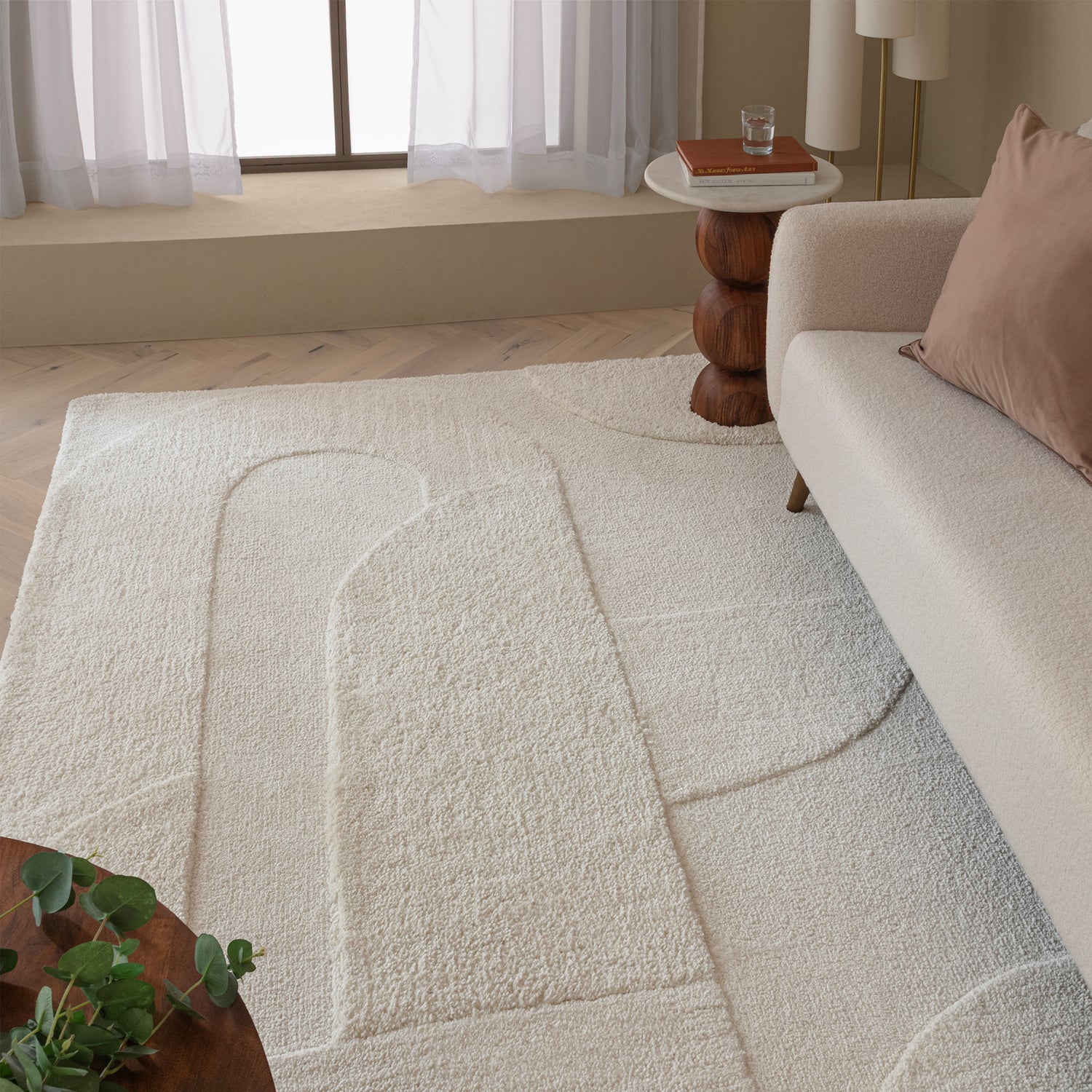
Textured neutral rugs are one of the simplest ways to add that missing layer, bringing warmth and balance without introducing bold pattern or colour.
Why Rooms Feel “Flat”
A room can be well put together and still feel underwhelming. Often, this comes down to surfaces rather than layout or colour.
Many modern interiors rely heavily on smooth, hard finishes: painted walls, flat fabrics, clean-lined furniture, wood or laminate flooring. Visually, everything can sit on the same level, with little variation to soften the space.
Adding more colour doesn’t always solve it. If the underlying textures remain the same, the room can still feel one-dimensional.
It’s often most noticeable in spaces that are otherwise carefully considered. Everything matches, nothing clashes, but the room doesn’t quite settle.
In these cases, what’s missing is usually contrast in surface, something that introduces variation without disrupting the overall look.
Where Textured Neutral Rugs Work Best
Textured neutral rugs work best in spaces where the aim isn’t to introduce a strong feature, but to make the room feel more balanced. Because they rely on tone and surface rather than pattern, they tend to sit comfortably within a wide range of interiors.
Living Rooms
In living rooms, they help anchor the space and connect furniture to the floor. This is especially useful in open layouts, where the room can otherwise feel slightly disconnected.
Subtle, tonal designs work particularly well here, adding structure without drawing attention. Collections like the Laurent rugs are a good example, offering understated pattern and surface variation that sits comfortably in both modern and more traditional spaces.
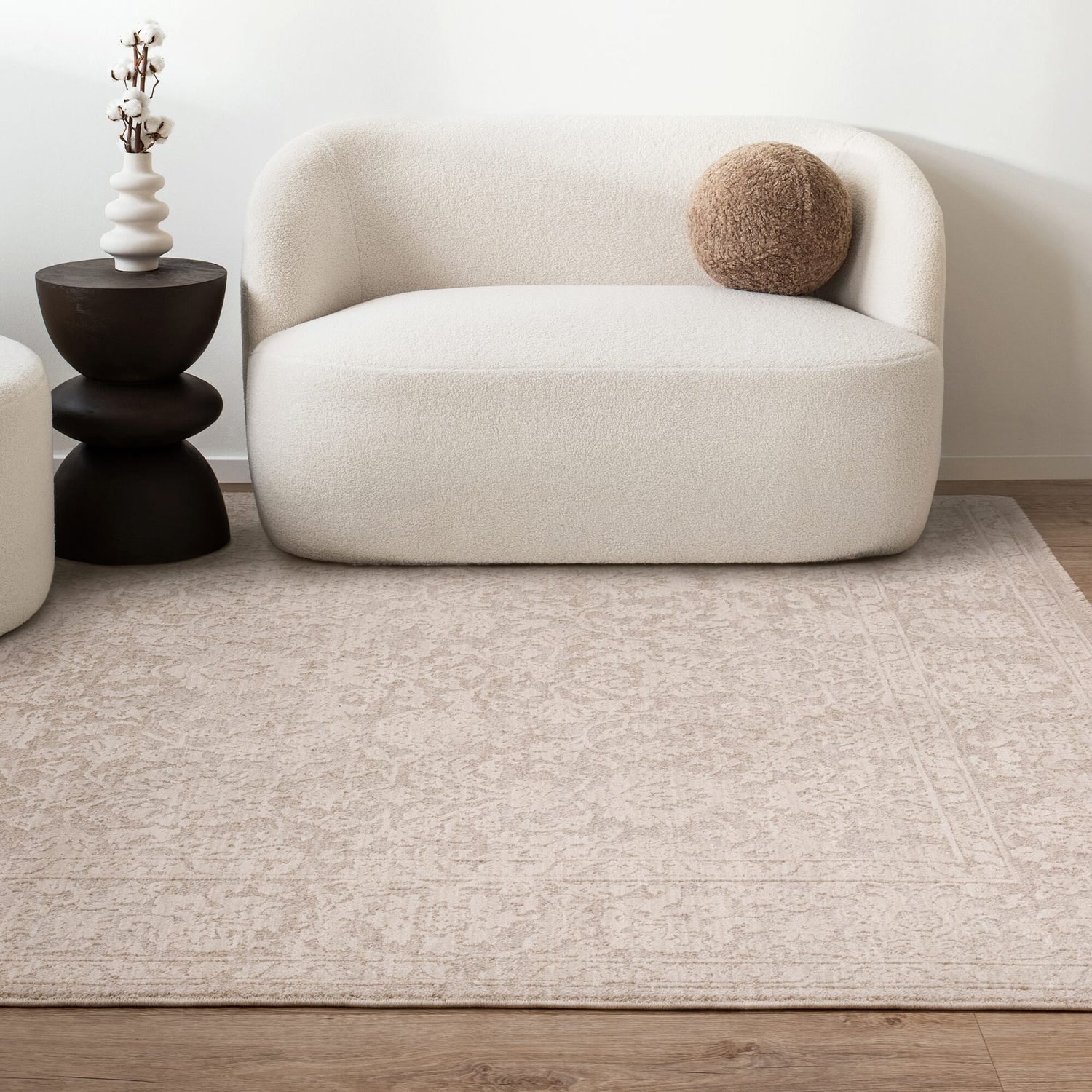
The result is a space that feels more settled, somewhere you actually want to sit and stay rather than just pass through.
Bedrooms
Bedrooms often benefit from a softer, more settled feel. Hard flooring can make the space feel stark, especially at the start and end of the day.
Fuller textures and wool-feel finishes tend to work best here, helping the room feel warmer and more relaxed. Ranges like the Hague rugs bring that softness while staying within a calm, neutral palette.
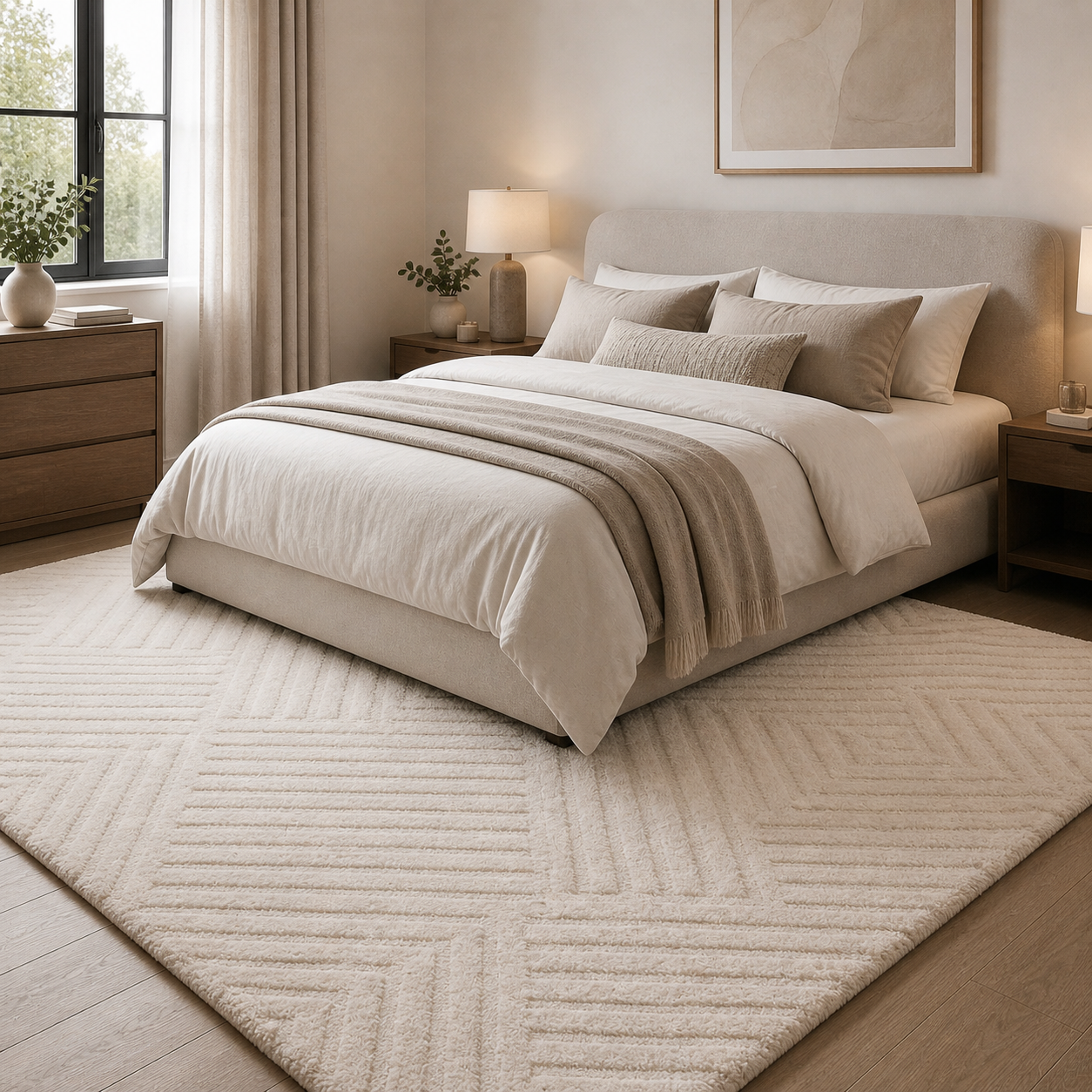
It’s a small change, but one that makes the room feel noticeably calmer and more comfortable to live in.
Open-Plan Spaces
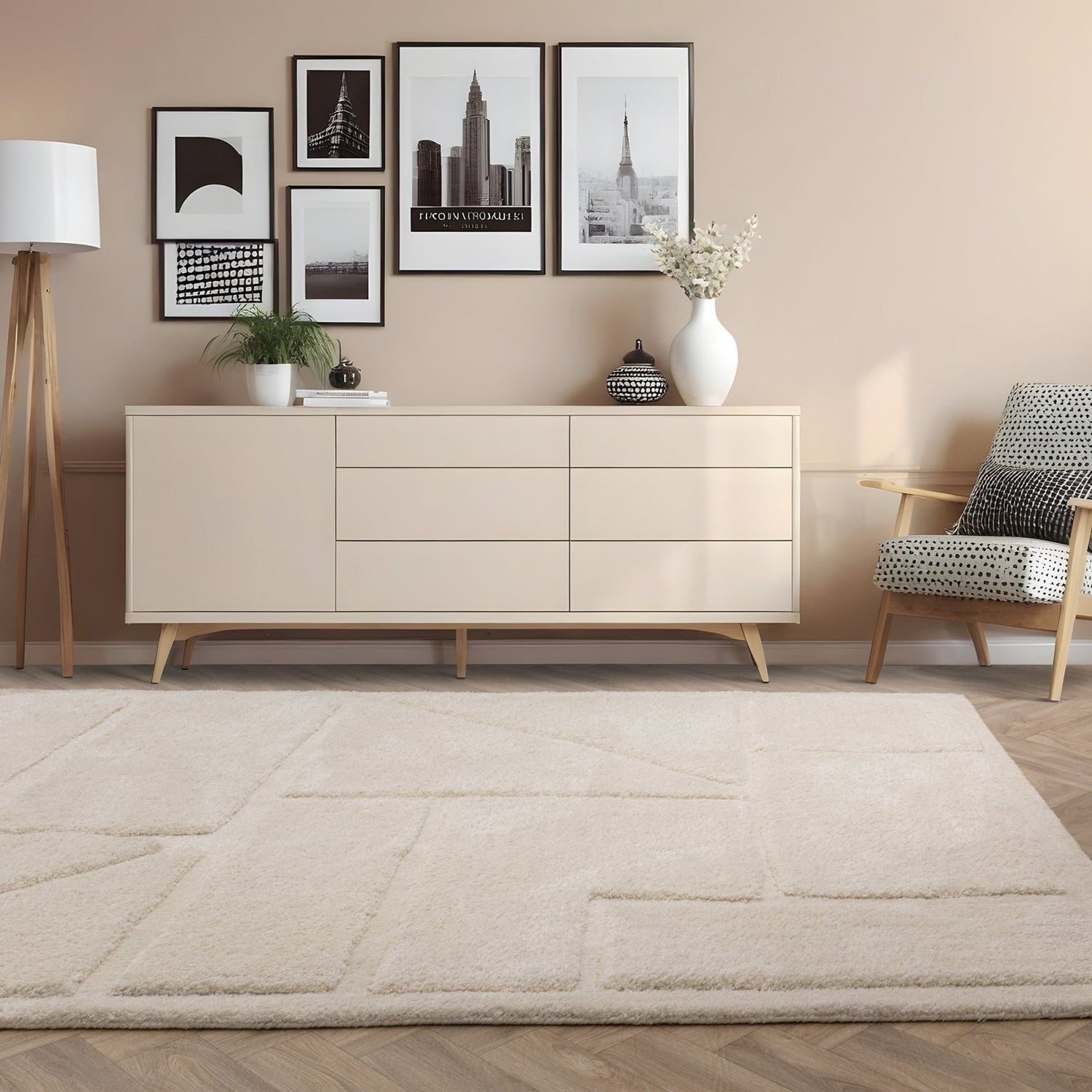
In open-plan areas, rugs are often used to define zones rather than decorate them. A textured neutral rug can separate spaces without creating a harsh visual break, helping the layout feel more intentional.
Larger, tonal designs tend to work best, particularly those that don’t interrupt the flow of the room. Options within the Horizon collection are well suited to this, providing structure without adding contrast.
Practical, Everyday Spaces
In busier areas, the balance shifts slightly towards practicality. You still want texture, but with finishes that are easier to live with day to day.
Lower-pile designs and durable materials tend to work best here. Collections like Zennith rugs offer a more practical option while still maintaining a soft, neutral look.
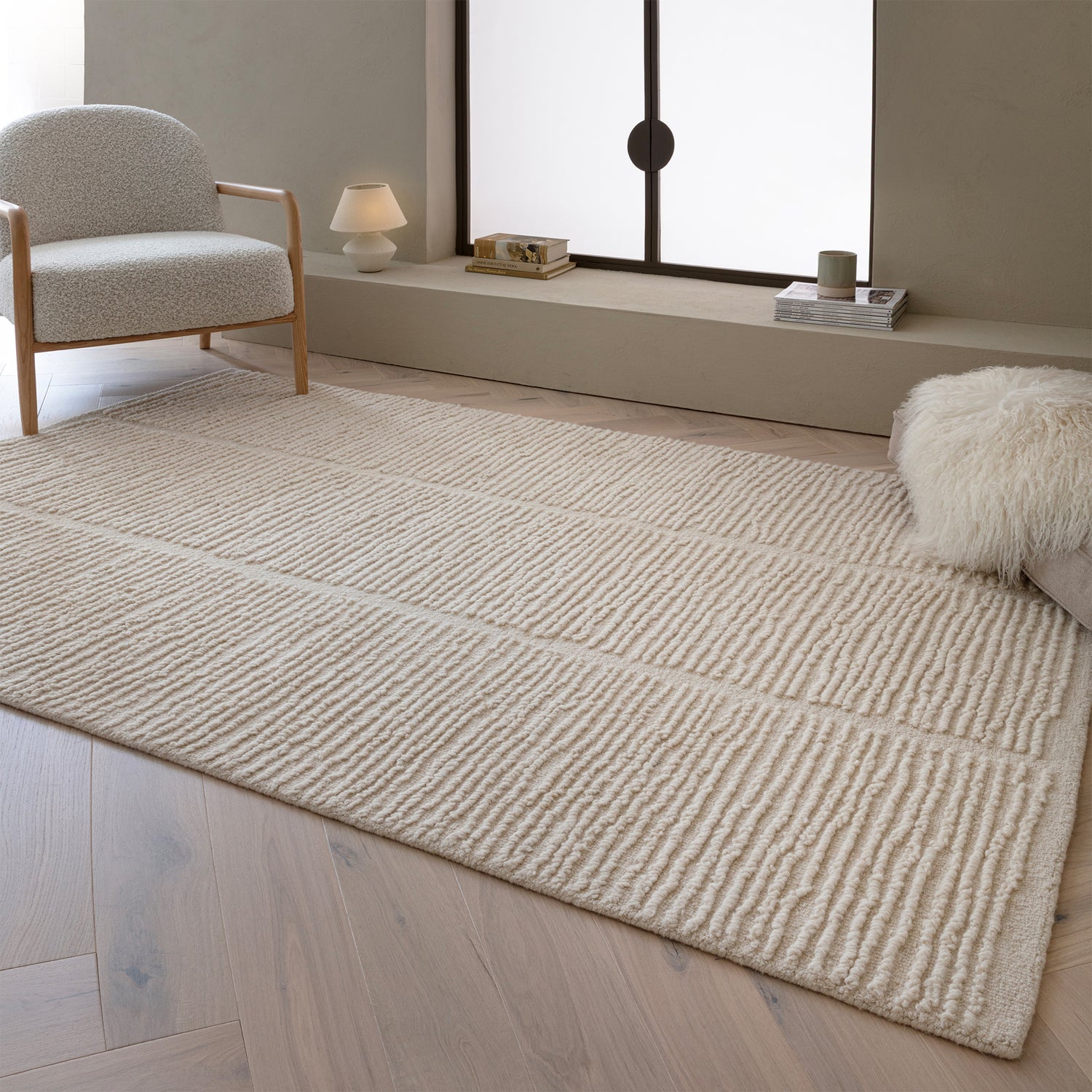
The result is a space that feels considered without feeling delicate or high-maintenance.
Choosing the Right Style
Once you know texture is what the room needs, the next step is choosing the right type of neutral rug. The differences usually come down to how visible the surface detail is, and how much presence you want the rug to have.
The right choice shouldn’t feel like a statement, it should feel like the room finally makes sense.
Subtle Pattern with a Neutral Base
If your room already feels quite neutral, but you don’t want it to look too plain, tonal pattern is often the easiest place to start.
The Laurent LA03 Rug and Laurent LA04 Rug are good examples, introducing pattern in a very understated way that works across different interiors.
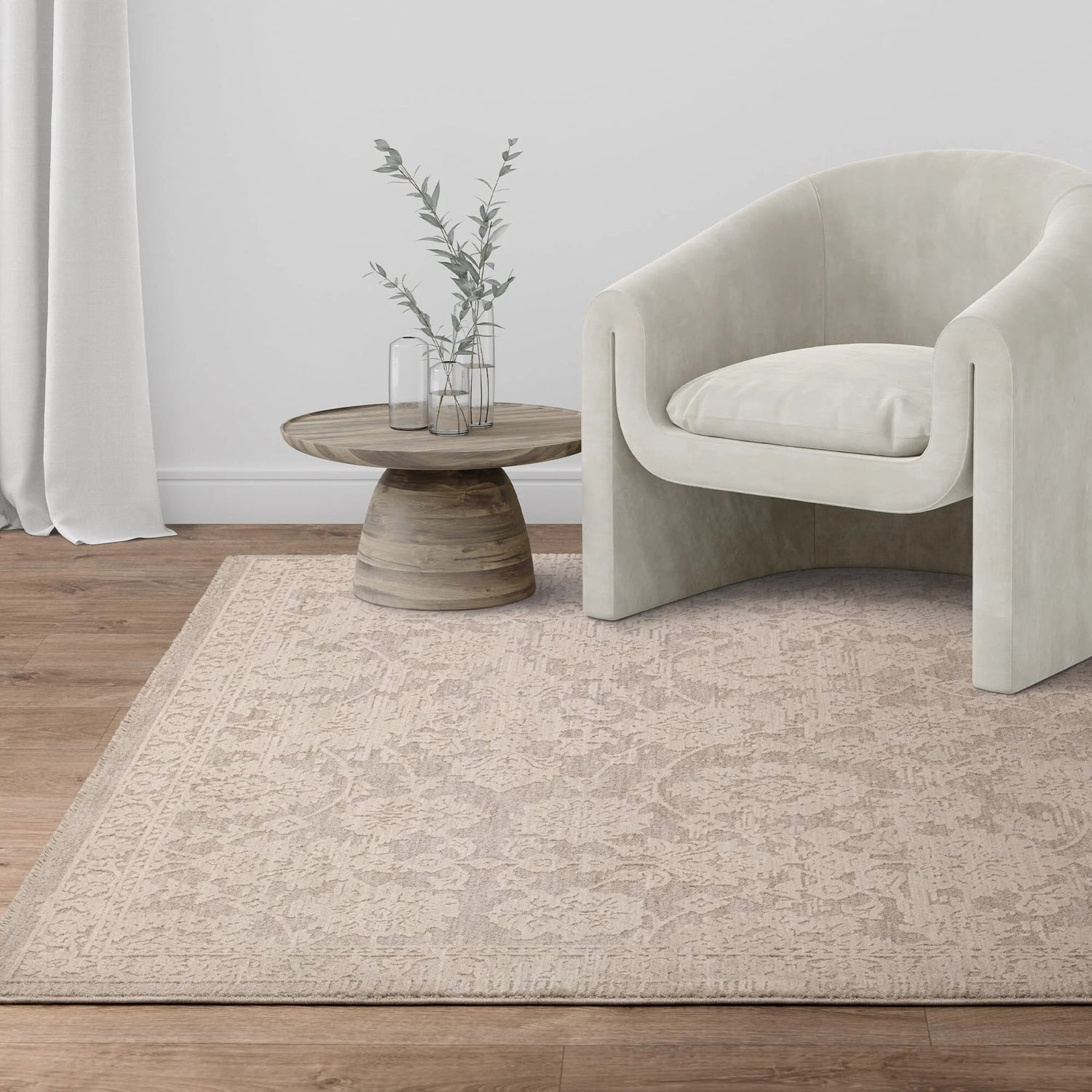
For a more structured look, the DKNY Central Park West Ivory Rug offers a defined surface while staying within a soft, neutral palette.
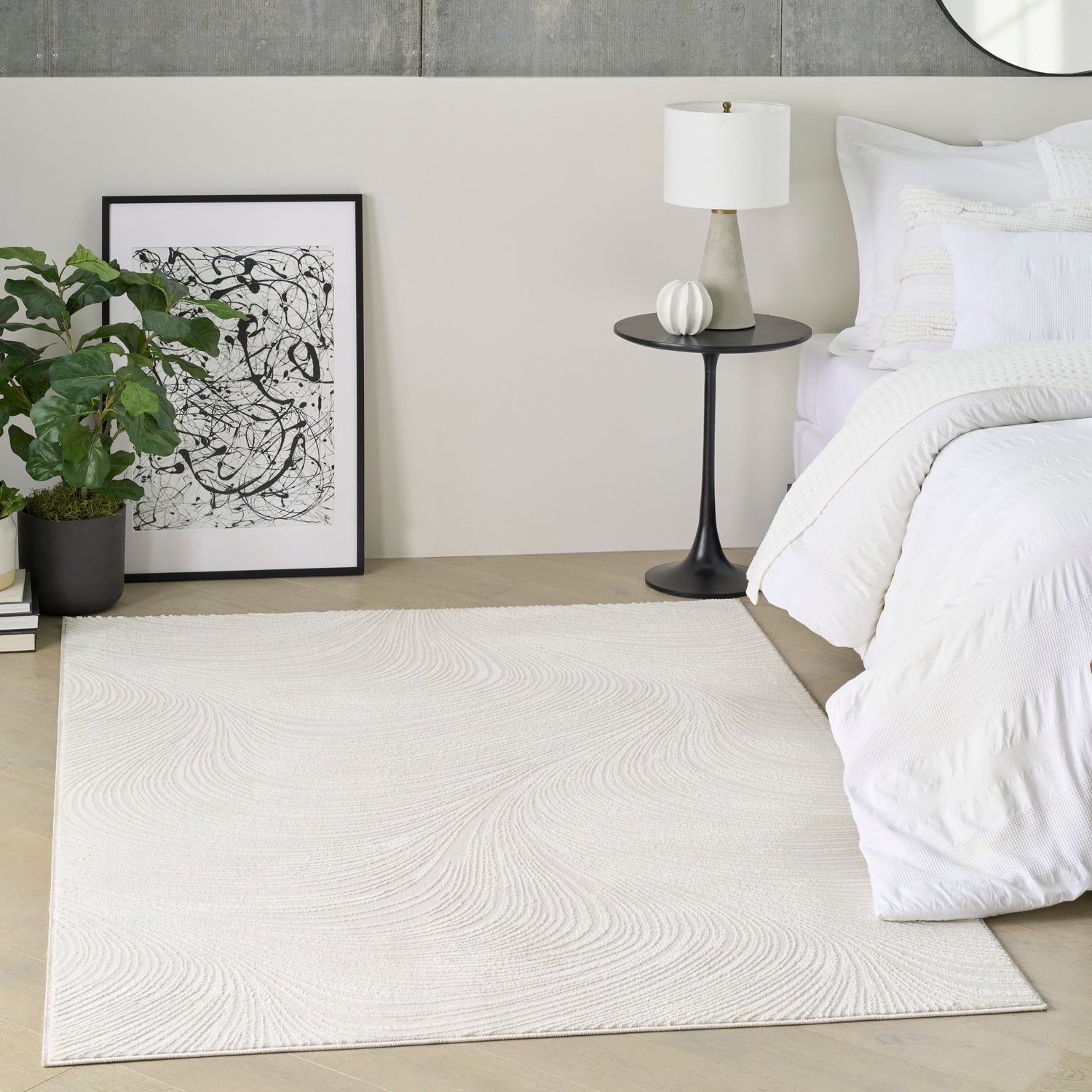
Plain, Minimal and Clean
For rooms that are already visually busy, or where you want the rug to sit quietly in the background, plain styles often work best.
The Blade Putty Rug and Blade Border Putty/Charcoal Rug use a soft sheen and subtle variation to create interest without pattern. You can explore more options within the Blade rug collection.
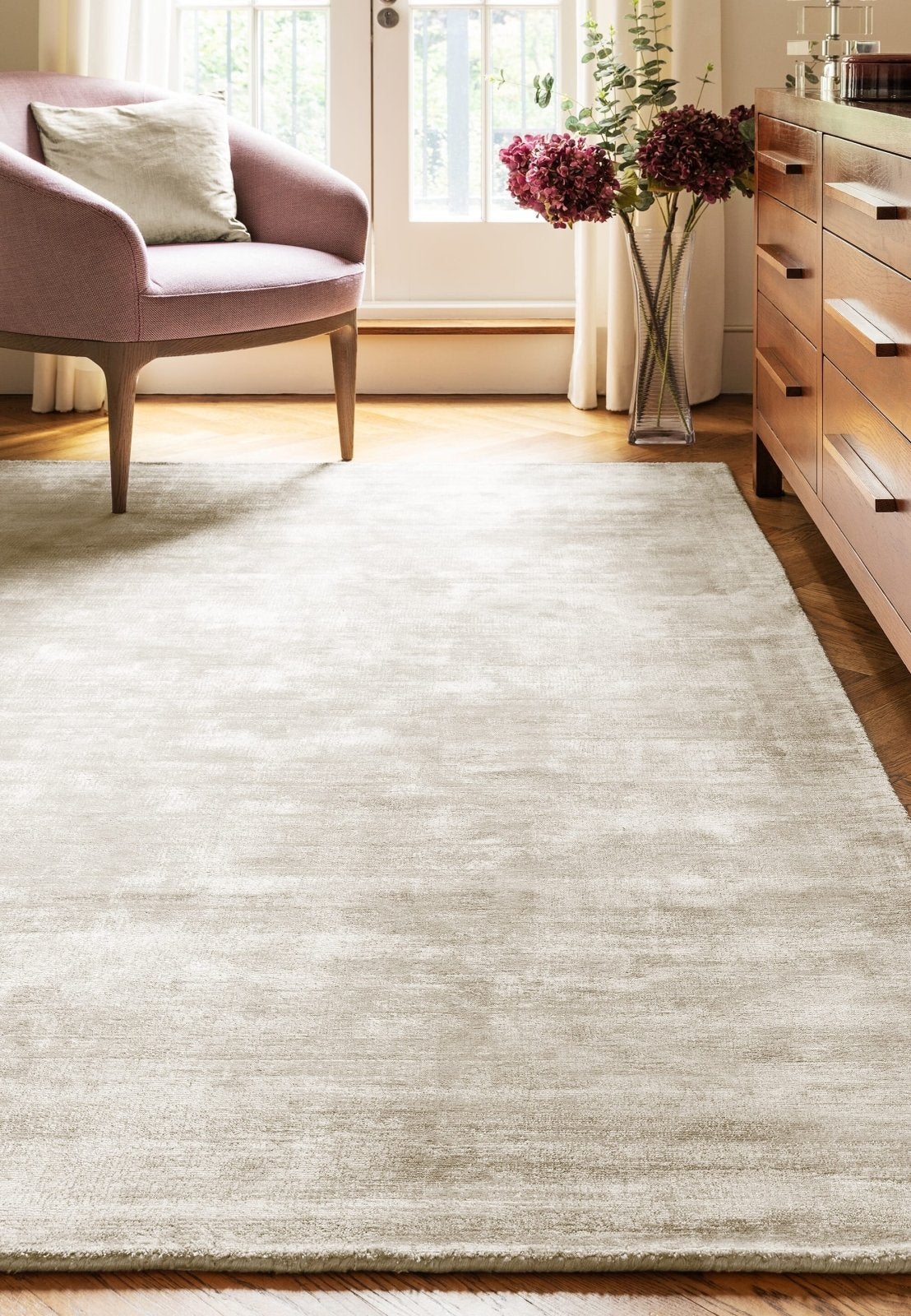
Soft Texture and Comfort
In bedrooms or relaxed spaces, comfort becomes more important than visual detail.
The Tova Ivory Rug provides a softer feel underfoot, while maintaining a simple, neutral appearance.
For a slightly more practical alternative, the Zennith Column Rug offers a similar look with a lower profile.
Refined Texture with a Softer Finish
If you want something that sits between soft texture and structured design, slightly more refined surfaces can work well.
The Katherine Carnaby Coast CS02 Oyster Rug is a good example, offering a subtle texture with a more tailored finish. You can explore similar styles within the Katherine Carnaby Coast collection.
Low-Pile and Practical
For busier areas, lower-pile designs tend to be the most straightforward option.
The Modern Comfort MNC01 Ivory/Black Rug offers a simple, neutral base with just enough surface detail to lift the space.
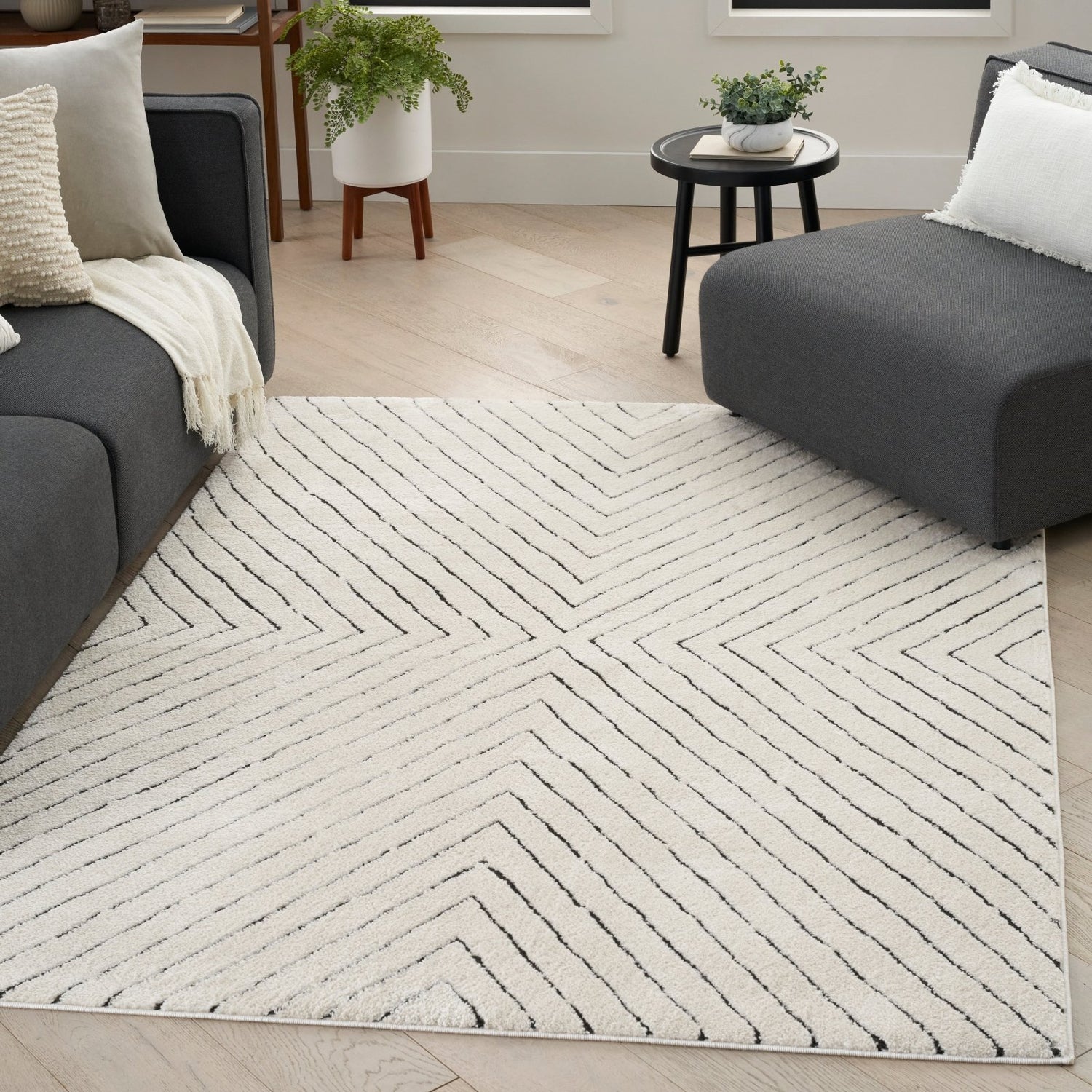
Options like the Olsen Glide Rug and Tova Ivory Rug sit slightly higher on the design side while keeping the same restrained feel.
Common Mistakes When Choosing Neutral Rugs
Neutral rugs are often seen as the safer option, but there are still a few common mistakes that can leave a room feeling just as flat as before.
Choosing Something Too Flat
Not all neutral rugs add depth. Some are completely uniform in colour and surface, which means they can disappear into the floor rather than lifting the space.
Even a small amount of surface detail can make the rug feel more intentional.
Going Too Small
Size plays a major role in how a room feels. A rug that’s too small can leave furniture floating, making the space feel disconnected rather than grounded.
Matching Too Closely
When everything sits in the same tone, the room can become flat rather than coordinated. A slight shift in texture or shade usually works better.
Focusing Only on Appearance
A rug might look right, but if it doesn’t suit how the space is used, it can quickly become impractical. Balancing appearance with function leads to a better long-term result.
Bringing Everything Together
Most rooms don’t need a complete redesign to feel right. Often, the difference comes from adding a layer that ties everything together rather than changing what’s already there.
When chosen carefully, a textured neutral rug can make a space feel easier to live in, more settled, more comfortable, without ever feeling overdone.
If your room feels slightly flat, it’s rarely about adding more. It’s about adding the right thing, in the right way.


